Introduction
Technology is evolving rapidly, and businesses must adapt to survive. Therefore, modern organizations are constantly searching for smarter ways to improve efficiency. This is where digital infusing aggr8tech becomes highly relevant.
In simple terms, it refers to integrating advanced digital solutions into existing systems. As a result, businesses can enhance performance without completely rebuilding their infrastructure. Moreover, this approach allows companies to remain competitive in a fast-changing digital world.
In this guide, you will explore its meaning, benefits, applications, and future impact. Additionally, you will learn how to implement it effectively.
What Is Digital Infusing Aggr8Tech?
At its core, digital infusing aggr8tech focuses on embedding modern technologies into traditional processes. Instead of replacing systems entirely, it enhances them strategically.
For instance, a business may integrate AI into its operations. Consequently, it can automate tasks and make smarter decisions.
Key Components
- Automation: Reduces manual effort and saves time
- Artificial Intelligence: Enables predictive insights
- Data Analytics: Improves decision-making accuracy
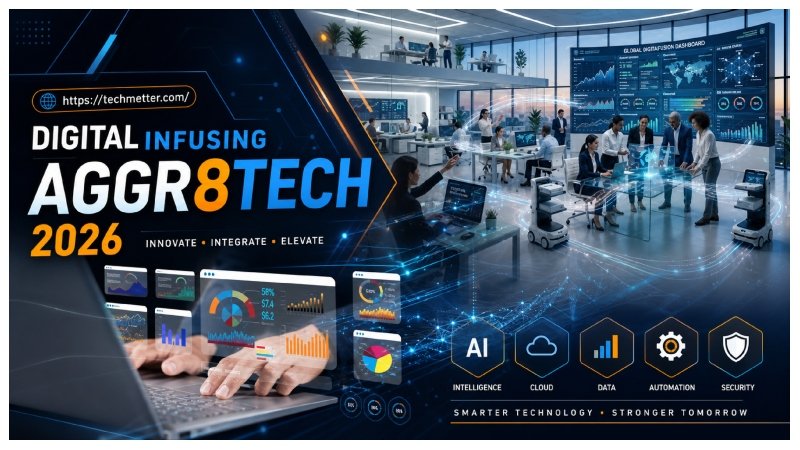
- Cloud Computing: Provides flexibility and scalability
Together, these elements create a powerful digital ecosystem.
Why It Matters in Today’s World
The business landscape is more competitive than ever. Therefore, companies must innovate continuously. Digital transformation is no longer optional; instead, it is essential.
Major Benefits
- Increased efficiency
- Improved customer experience
- Faster decision-making
- Reduced operational costs
Furthermore, organizations that adopt digital solutions often outperform competitors. In addition, they adapt more quickly to market changes.
How Digital Infusing Aggr8Tech Works
Understanding the process is important. So, let’s break it down step by step.
Step 1: Assessment
First, businesses analyze their current systems. Then, they identify gaps and inefficiencies.
Step 2: Strategy Development
Next, a clear plan is created. At this stage, companies choose the right technologies.
Step 3: Integration
After that, digital tools are integrated into existing systems. Meanwhile, teams ensure minimal disruption.
Step 4: Optimization
Finally, performance is monitored and improved. As a result, systems become more efficient over time.
Real-World Applications
This approach is already transforming industries. For example, many sectors are leveraging it successfully.
Healthcare
Hospitals use digital systems for managing patient data. As a result, doctors can make faster decisions. Additionally, patient care improves significantly.
Retail
Retailers analyze customer behavior using data. Therefore, they can optimize inventory and boost sales.
Manufacturing
Factories rely on automation to improve productivity. At the same time, errors are reduced.
Finance
Banks use AI to detect fraud. Moreover, customer service becomes faster and more personalized.
Comparison Table: Traditional vs Digital Approach
| Feature | Traditional Systems | Digital Infusing Approach |
|---|---|---|
| Speed | Slow | Fast |
| Accuracy | Moderate | High |
| Cost Efficiency | Low | High |
| Scalability | Limited | Flexible |
| Decision Making | Manual | Data-Driven |
Clearly, the digital approach offers stronger performance across all areas.
Key Challenges to Consider
While the benefits are clear, there are challenges. However, they can be managed effectively.
High Initial Investment
At first, costs may seem high. Nevertheless, long-term savings make it worthwhile.
Skill Gaps
Employees may lack technical knowledge. Therefore, training becomes essential.
Data Security
As systems become digital, risks increase. Consequently, strong security measures are required.
Best Practices for Success
To succeed, businesses must follow smart strategies. For example, the following practices can help.
Focus on Clear Goals
Define clear objectives. This way, the process remains focused.
Start Small
Begin with small changes. Then, expand gradually.
Invest in Training
Educate your team. As a result, adoption becomes smoother.
Monitor Performance
Track progress regularly. In addition, make improvements when needed.
Future Trends to Watch
Looking ahead, several trends will shape the future. Notably, innovation continues to accelerate.
Artificial Intelligence Growth
AI will become more powerful. Therefore, automation will increase.
Internet of Things (IoT)
Devices will become more connected. As a result, systems will be smarter.
Automation Expansion
More tasks will be automated. Consequently, efficiency will improve.
Data-Driven Culture
Businesses will rely heavily on data. Thus, decision-making will become more precise.
How Businesses Can Get Started
Getting started is easier than it seems. First, follow a structured approach.
- Evaluate current systems
- Identify improvement areas
- Choose suitable technologies
- Work with experts if needed
- Implement and monitor results
By following these steps, businesses can transition smoothly.
Conclusion
Digital infusing aggr8tech is shaping the future of business. In fact, it has become a necessity rather than an option.
By integrating advanced technologies, companies can improve efficiency and reduce costs. At the same time, they can deliver better user experiences.
Ultimately, those who adopt this approach early will gain a strong competitive advantage. So, now is the right time to embrace digital transformation and move forward with confidence.
Visit Tech Metter for more details.