Introduction
What is basic architectural style kdarchistyle is more than the act of building structures; it is the thoughtful organization of space, form, function, and experience. Every building we encounter—whether a modest home, a public institution, or a commercial space—communicates an architectural style, consciously or unconsciously. These styles help us understand not only how a building looks, but also how it works, how it responds to its environment, and how it serves people.
For students and early professionals, understanding basic architectural styles is a crucial step toward developing strong design thinking. Among emerging conceptual approaches to architectural fundamentals is KD ArchiStyle—a simplified yet structured way of understanding architectural design based on clarity, function, and essential principles.
This article explores KD ArchiStyle as a basic architectural style, explaining its meaning, philosophy, core principles, design elements, applications, advantages, and relevance in contemporary architectural practice. The goal is to present KD ArchiStyle as both a learning framework and a practical design mindset that supports thoughtful, responsible, and basic architectural style kdarchistyle.
Defining KD ArchiStyle
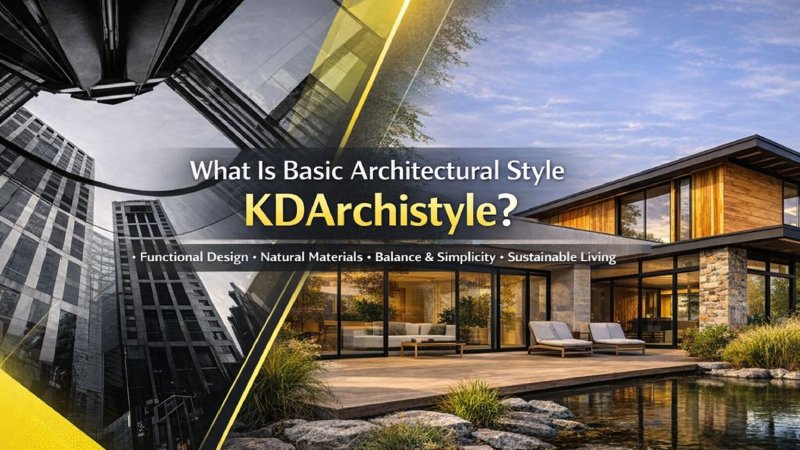
KD ArchiStyle can be understood as a basic architectural style rooted in fundamental design principles, rather than decorative expression or historical imitation. It focuses on how architecture works before how it looks. The term “basic” does not imply simplicity in thought, but rather clarity in intention.
KD ArchiStyle emphasizes:
-
Purpose-driven design
-
Clear spatial logic
-
Honest expression of materials and structure
-
Balanced proportions
-
Minimal yet meaningful aesthetics
Rather than being tied to a specific era, region, or movement, KD ArchiStyle functions as a foundational design approach. It helps architects and students develop what is basic architectural style kdarchistyle from the ground up—starting with form, function, and human experience.
In essence, KD ArchiStyle is not about following trends. It is about understanding architecture at its core and creating spaces that are rational, usable, and timeless.
The Philosophy Behind KD ArchiStyle
The philosophy of KD ArchiStyle begins with a simple question:
“What does this building need to do?”
Instead of starting with form or ornamentation, KD ArchiStyle prioritizes:
-
Human needs
-
Functional requirements
-
Environmental context
-
Structural logic
This approach aligns with the belief that good what is basic architectural style kdarchistyle does not need excessive complexity to be meaningful. By focusing on essentials, KD ArchiStyle encourages designers to remove unnecessary elements and allow the architecture to express itself naturally.
At its core, KD ArchiStyle believes that:
-
Architecture should serve people before impressing them
-
Design clarity leads to long-lasting value
-
Simplicity enhances usability and sustainability
-
Strong fundamentals create better architecture at all scales
Core Principles of KD ArchiStyle
1. Function as the Foundation
In KD ArchiStyle, function is not an afterthought—it is the starting point. The layout, form, and spatial relationships are developed based on how people will use the space.
Questions such as:
-
Who will use this building?
-
How will they move through it?
-
What activities will occur inside?
guide every design decision.
2. Simplicity of Form
KD ArchiStyle favors simple, readable forms. Complex shapes are avoided unless they serve a clear purpose. This simplicity helps:
-
Improve spatial understanding
-
Reduce construction complexity
-
Enhance visual calm
Simple forms also allow architecture to age gracefully over time.
3. Clarity in Spatial Organization
Spaces designed using KD ArchiStyle are easy to navigate. Circulation paths are logical, transitions are smooth, and spaces relate naturally to one another.
Clear zoning between:
-
Public and private spaces
-
Active and quiet areas
-
Open and enclosed volumes
is a defining characteristic of this style.
4. Honest Use of Materials
Materials in KD ArchiStyle are used honestly and thoughtfully. Instead of hiding structure or finishes, materials are allowed to express their natural qualities.
This principle supports:
-
Material efficiency
-
Sustainable choices
-
Visual authenticity
Concrete looks like concrete, wood feels like wood, and steel expresses strength without disguise.
5. Balanced Proportion and Scale
KD ArchiStyle places strong emphasis on proportion. Even simple buildings can feel powerful and comfortable when scale and dimensions are carefully considered.
Human scale is especially important—spaces should feel neither overwhelming nor restrictive.
Key Design Elements in KD ArchiStyle
Form and Massing
Buildings designed under KD ArchiStyle often feature:
-
Rectilinear or geometrically clear forms
-
Balanced massing
-
Strong horizontal and vertical relationships
The overall form is guided by function, site constraints, and climate rather than visual trends.
Spatial Planning
Interior spaces are designed for efficiency and comfort. Open plans are used when appropriate, but privacy and acoustic needs are also respected.
Spatial planning focuses on:
-
Logical room relationships
-
Efficient circulation
-
Maximum usability with minimal wasted space
Light and Ventilation
Natural light and ventilation play a vital role in KD ArchiStyle. Openings are positioned strategically to:
-
Improve indoor comfort
-
Reduce energy consumption
-
Enhance spatial quality
Daylight is treated as a design material rather than an afterthought.
Color and Texture
Color palettes are usually neutral and restrained. Textures come from materials themselves rather than applied decoration.
This approach creates calm, adaptable spaces that can evolve with use.
Influence and Architectural Context
KD ArchiStyle draws inspiration from several architectural ideologies without directly copying them. These include:
-
Modern architecture’s emphasis on function
-
Minimalism’s reduction of excess
-
Vernacular architecture’s responsiveness to climate and context
-
Sustainable design principles
However, KD ArchiStyle remains distinct by positioning itself as a learning and design framework, rather than a stylistic movement.
Applications of KD ArchiStyle
Residential Architecture
KD ArchiStyle works especially well for houses and apartments where comfort, efficiency, and long-term usability are priorities.
Simple layouts, flexible spaces, and durable materials make homes designed in this style practical and timeless.
Educational and Institutional Buildings
Schools, studios, and training centers benefit from the clarity and organization offered by KD ArchiStyle. Clear circulation and adaptable spaces support learning environments effectively.
Commercial and Office Spaces
For offices and small commercial buildings, KD ArchiStyle provides:
-
Efficient layouts
-
Professional aesthetics
-
Cost-effective construction
The result is architecture that supports productivity without unnecessary distraction.
Student and Conceptual Projects
KD ArchiStyle is particularly valuable for architecture students. It helps them:
-
Focus on fundamentals
-
Develop strong design logic
-
Avoid over-designing early projects
Many academic projects benefit from this disciplined approach.
Advantages of KD ArchiStyle
One of the strongest advantages of KD ArchiStyle is its timelessness. Because it avoids trends and excessive ornamentation, buildings remain relevant for decades.
Other benefits include:
-
Cost efficiency
-
Ease of construction
-
Sustainability potential
-
Clear communication of design intent
-
Flexibility for future adaptation
Limitations and Design Challenges
While KD ArchiStyle offers many strengths, it also presents challenges.
-
Poor detailing can make simple designs feel bland
-
Over-simplicity may result in lack of character
-
Strong design fundamentals are required to succeed
-
Requires discipline and restraint from the designer
These challenges highlight the importance of thoughtful execution.
KD ArchiStyle Compared to Other Styles
Unlike classical architecture, KD ArchiStyle avoids ornamentation and historical symbolism.
Compared to modern architecture, it is less expressive and more grounded in basics.
Unlike minimalism, KD ArchiStyle does not pursue reduction for aesthetic reasons alone—it reduces only when function allows.
Relevance in Contemporary Architecture
In an era of rapid urbanization, climate challenges, and resource limitations, KD ArchiStyle offers a responsible design mindset.
Its emphasis on:
-
Efficiency
-
Sustainability
-
Human-centered design
-
Long-term usability
makes it especially relevant for future architectural practice.
Conclusion
KD ArchiStyle represents a return to architectural fundamentals. It reminds designers that strong what is basic architectural style kdarchistyle begins with clarity, purpose, and respect for human needs.
Rather than defining architecture by appearance alone, KD ArchiStyle defines it by how well it works, how honestly it is built, and how thoughtfully it serves its users.
Visit Tech Metter