Seasonal lighting is very important in determining how homes and commercial businesses should look during such festive seasons. The owners of property pay much attention to visual appeal, but the building under every exhibition has to be planned. The choice of layout, the choice of material to use, and the way the lighting is executed determine how effective a lighting arrangement will be during the season.
An expert holiday lighting company is going to undertake every project in a procedural manner, which consists of design, installation, and reliability in the long term. Such projects are not based on simple arrangements, as is the case with basic setups; they are founded on measured layouts, technical assessment, and uniform implementation. Such a solution will guarantee the visual soundness of the exhibition and its safety along with compatibility with the entire composition of the building.
Understanding the Role of a Holiday Lighting Company
A holiday lighting company is one that offers all the services of a seasonal lighting project, which include all steps. Such services are initial consultation, design planning, installation, maintenance, and post-season removal. All the stages are based on a specific procedure to ensure consistency and safety.
Residential and Commercial Lighting Projects
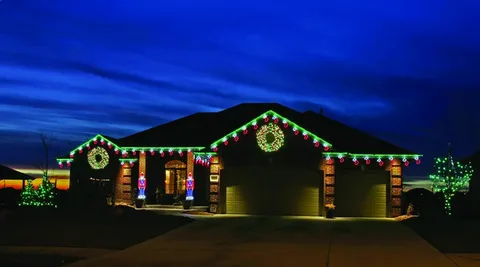
The residential developments are centered on houses, mini landscapes, and individual tastes in the designs. Such installations usually emphasize roof lines, doorways, and gardens.
Business ventures are large-scale and use complicated plans. These can be office buildings, shopping centers, and street areas. They are demanding tougher materials, increased capacity of loads, and tight schedules.
Fundamental Responsibilities in Display Execution
The implementation of these steps has been determined to have various critical steps that promote stability and performance:
- Site assessment: Experts evaluate the construction of the property, access, and possibilities of the layout.
- Layout planning: Designs are overlaid to suit the features of architecture and spacing.
- Electrical aspects: Distribution of power and load control are also well-known safety standards.
The following steps determine the way the holiday lighting services will be run under real-world conditions. Design and implementation of a structured seasonal lighting installation requires close coordination.
Key Elements of a Well-Planned Lighting Layout
A systematic design defines the look of a display when viewed at various angles. Planning is carried out prior to the onset of any installation to prevent irregularities.
Real Estate Appraisal and Surveys
The correct measurements are used to direct the whole process of layout.
- Rooflines and edges
- Landscape features and trees
- Pathways and entry points
The spacing and alignment on the property is done appropriately by each measurement.
Focal Points and Visual balance
Design dwells on some of the major points of attention. The focal points are usually the entranceways, windows, and roof peaks. Even lighting helps to avoid congestion and ensure readability.
Symmetry and Proportion in Design
The symmetry brings a uniform impression to the display. Proportion makes sure that there are no parts that are too bright or too dark. An organized design of the holiday lights is consistent with the general lighting design of the outdoors.
Materials and Equipment Used in Holiday Lighting
The performance and durability are directly influenced by the choice of material. Professionals use tried equipment, which is of industry standard.
Types of Lights and Fixtures
Typical lighting types are
- Holiday lights that are energy-efficient and long-lasting: LED
- Flexible installation of string lights
- Roofline icicle detailing lights
- Netting lights to bushes and shrubs
The types have a particular purpose in the display.
Mounting Hardware and Tools
It needs to be installed using secure mounting systems. These contain clips, fasteners, and extension tools specific to various surfaces. Quality hardware eliminates the destruction of buildings and maintains the stability of lights.
Electrical System and sources of power
Planning of electricity provides uniform performance. Installers estimate power capacity and share power equally. Lighting schedules are controlled by timers and controllers. The presence of reliable lighting equipment and LED holiday lights adds to the stable operation.
Process of Step-by-Step Execution
Implementation is done in a systematic work process that is accurate and consistent. Every stage is based on the other.
Pre-Installation Planning
The first step in planning is design mapping and preparation of materials. Equipment is arranged, and layout arrangements are confirmed by teams prior to commuting to the site.
Installation Techniques
Depending on the structure, installers use various techniques:
- Clips are used to install the roofline and are in line with the edges
- Wrapping on trees comes after even distance to the branches
- Pathways and features of the landscape are highlighted by ground lighting
Both the approaches need accuracy and uniformity.
Testing and Adjustments
Systems are then tested after the installation as the difference in brightness and stability is maintained. Space has been corrected, and electrical safety has been checked. This is the systematic process of installing holiday lighting that is used by a holiday lighting company to ensure the same outcome.
Safety and Compliance Considerations
Safety remains a central focus in every lighting project. Installations must meet established standards to reduce risks.
Electrical Safety Standards
Loads are distributed by the professionals to avoid overloads. They make use of certified elements and safe links to ensure stability.
Weather Resistance and Durability
Outdoor lighting is subject to exposure to the weather, rain, wind, and temperatures. Fittings and waterproofing materials guarantee long durability.
Working at Risk Management and Heights
Installations are frequently associated with high surfaces. There are ladders, harnesses, and safety measures that are used by teams to control risks. These measures would comply with lighting safety and outdoor electrical safety measures.
Maintenance and Post-Season Cleanup
Maintenance entails maintaining displays to be the same during the season. Extraction safeguards the resources to be used in the future.
Maintenance The seasonal maintenance
The lighting systems are checked by teams on a regular basis. They change the damaged bulbs and test connections to ensure the performance.
Safe Removal and Storage
Professionals take away lighting systems after the season. Effective storage eliminates damage and material lifetime. Holiday lighting maintenance is organized so that equipment can be used in future installations.
Lighting Layout and Implementation Issues
Lighting projects are usually associated with practical challenges that must be handled carefully.
Wavy Sides and Rough-Tiled Roofs
The form of structures that are not regular creates alignment problems. Installers do layout adjustments so as to ensure consistency in visuals.
Power Limitations and Accessibility Problems
The restricted sources of power influence the planning of installation. The issue of accessibility needs other methods of setting up.
Weather-Related Disruptions
There is an issue of weather conditions that can slow down installation or performance. The teams work out the schedule depending on the seasonal conditions.
Industry Insights into Modern Holiday Lighting Practices
The practice of lighting keeps on changing according to the new technology and design tastes.
Light-Saving Lighting Solutions
The systems that consume less energy save energy and at the same time remain bright. The use of LED systems is still popular.
Smart Lighting Controls and Automation
Automation enables the users to manage lighting programs remotely. Smart systems offer a uniform operation all season long.
Minimalist and Elaborate display styles
There are properties that have plain layouts with straight lines. There are others with intricate designs having overlaying lighting. These differences are indicative of modern-day trends in holiday lighting.
Conclusion
A properly designed lighting display requires planning, choice of materials, and accuracy in execution. Every phase is part of the appearance and performance of the installation. Layout designing and taking it down after the season, each and every aspect needs to be catered to. A professional holiday lighting company has a systematic process of doing things, which makes it consistent and safe. This systematic approach determines the way displays have visual balance and reliability in the long run in residential and commercial properties.
FAQs
Which aspects influence the price of seasonal lighting installations?
Prices vary based on the size of the property, the complexity of the design, the choice of materials, and the time spent on installing the property.
What is the average length of time of a regular lighting installation?
The majority of the projects require a few hours to one complete day, depending on the size of the property and the design specifics. Larger business arrangements would take several days.
What are the most popular kinds of lights to be used in the outdoor display?
The utilization of LED lights has increased because of their longevity and energy efficiency. Alternatives are available, like string lights, icicle lights, and net lights in various locations.
What are the recommendations regarding the frequency of checking lighting systems in the season?
Frequent inspections at a time interval provide good operation and security. The points of inspection are on connections, bulbs, and system stability.